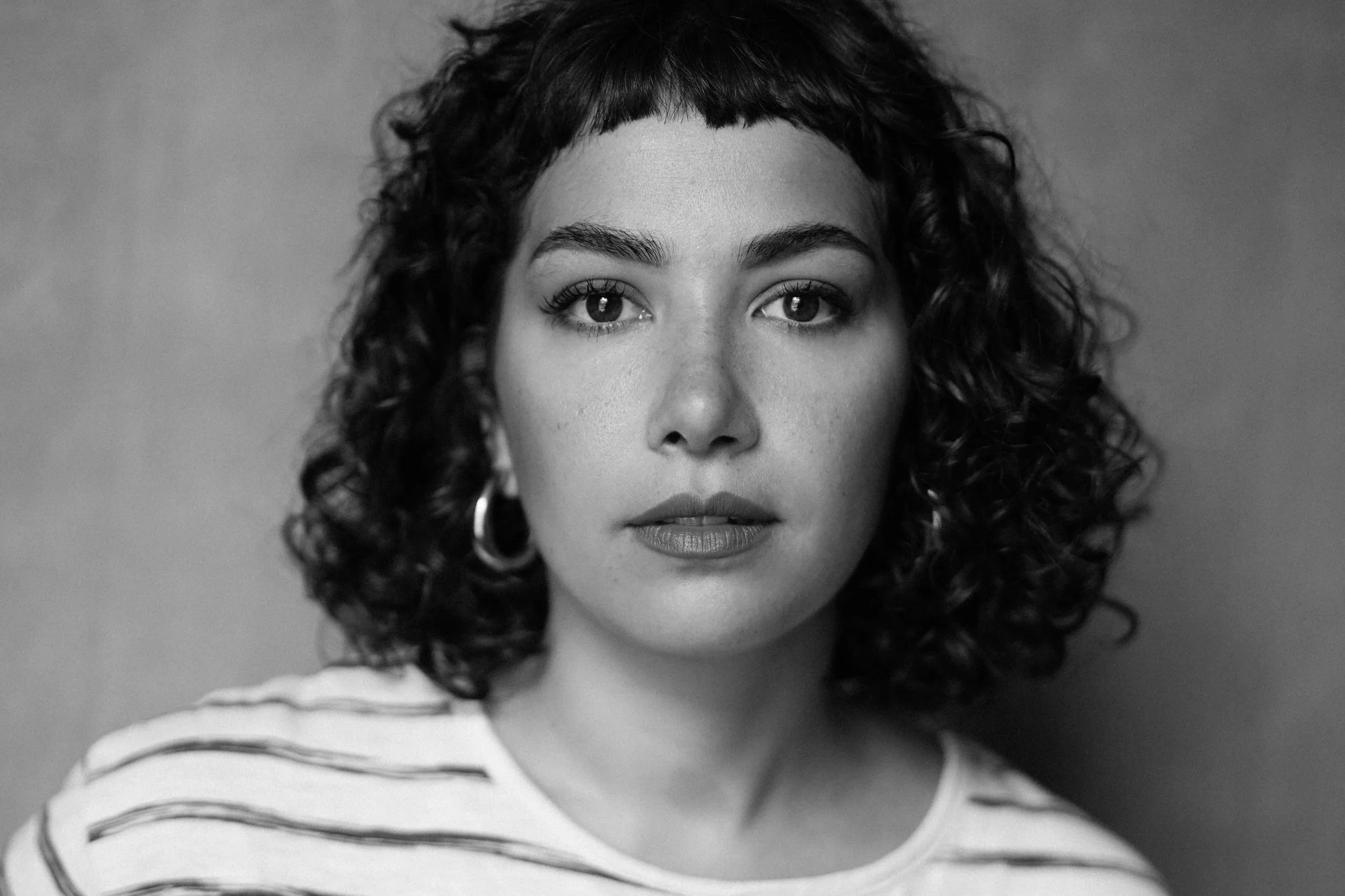
Sahar Zand is an award-winning British-Iranian journalist, presenter and documentary maker whose work spans international current affairs, investigations, news reporting and long-form storytelling.
Over the past two decades, she has reported, presented and produced stories around the world for broadcasters including the BBC, Channel 4, ITV, Al Jazeera, VICE, Sky News, CBS News and other international outlets. Her work has ranged from breaking news and correspondent reporting for major networks to investigations, feature films, radio documentaries and presenter-led current affairs.
Much of Sahar’s journalism has taken her into places that are difficult to reach and stories that are difficult to tell. In Mauritania, she spent weeks in the Sahara gaining the trust of remote nomadic communities while investigating the force-feeding of young girls for marriage for Channel 4’s Unreported World; the film went on to become one of the strand’s most-watched documentaries, reaching millions of viewers. In Afghanistan, she secured unprecedented access to the country’s only secure psychiatric institution, living alongside hundreds of patients traumatised by decades of war, including former fighters and extremists. On a later assignment, shortly before the Taliban returned to power, she interviewed a Taliban leader in Kabul about women’s rights and freedom of the press.
Her reporting has also produced tangible real-world impact. Her ITV Exposure investigation Britain’s Virginity Clinics helped bring the hidden practice of virginity testing and hymenoplasty into public view and contributed to both being outlawed in the UK. A VICE investigation into child labour in Nepal followed the rescue of children working inside brick kilns, with around 30 subsequently removed and placed into education. Reporting on abuse at a disciplinary camp in South Africa prompted a police investigation and intervention to protect children featured in the story.
For Sky News, Sahar spent more than a year investigating the misuse of INTERPOL’s Red Notice system by authoritarian states and powerful individuals. The resulting series, Dirty Work, examined cases of dissidents and ordinary people pursued across borders, challenged INTERPOL’s leadership directly and helped renew scrutiny of the system in Westminster. The investigation was discussed by MPs, won Best Investigation at the Freelancing for Journalists Awards and was runner-up for Radio/Podcast of the Year at the Foreign Press Association Media Awards.
Her international reporting has taken her from Syria and Iraq to Afghanistan, Nepal, Bangladesh, Nicaragua, India, Japan, Morocco, Kenya and the Philippines. She has reported from conflict zones, embedded with marginalised and hard-to-access communities, investigated abuses of power and interviewed people ranging from political and religious figures to traffickers, survivors, dissidents, children and families living through extraordinary circumstances. Her work combines the immediacy and rigour of news reporting with the access and depth of documentary storytelling.
Alongside her television work, Sahar has built an extensive career in radio and podcasts, presenting and producing documentaries and current-affairs programmes for the BBC, Sky News, Vespucci and other platforms. Her audio work has covered conflict, politics, identity, religion, migration, human rights, culture and the arts, often taking her back into the field to report and produce her own stories.
Sahar also reports and contributes analysis on major international developments, with particular expertise on Iran. Born in Tehran and a native Persian speaker, she brings language, lived knowledge and years of reporting on Iranian politics and society to her work. Her analysis and reporting have appeared across international television, radio and print, while her TED talk on Iran’s “Woman, Life, Freedom” movement has been watched more than a million times.
Born in Iran, Sahar left the country with her mother and sister at the age of 12 following political persecution. After several years being moved across borders and living in refugee camps around Europe, she eventually settled in Britain. Those experiences gave her an early understanding of displacement, political power and what it means to live on the margins — themes that have informed her journalism without defining its boundaries.
Sahar is also an experienced keynote speaker, host and moderator. She has spoken at institutions, conferences, universities and festivals around the world, including presenting the findings of her reporting at the United Nations in Geneva, and regularly contributes to public conversations on journalism, Iran, human rights, press freedom and international affairs.
She is based in London and works internationally. Sahar speaks English, Persian and Dari.